


Blog
What Happens at a Comprehensive Eye Exam in Mount Pleasant, WI
November 15, 2026
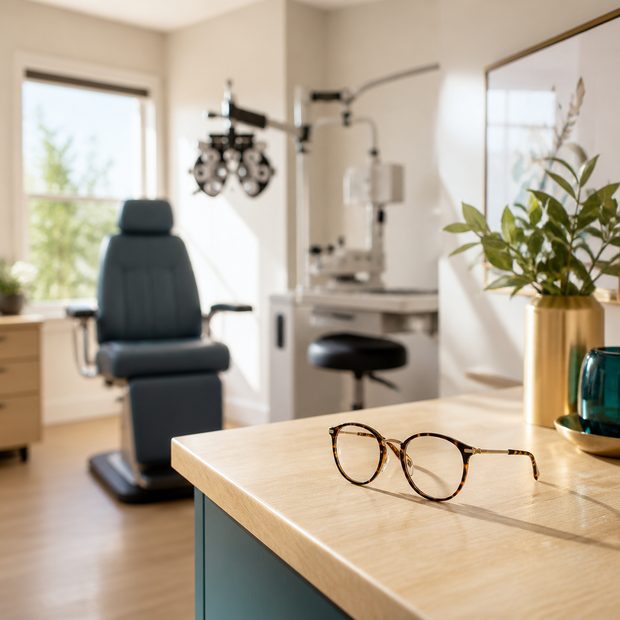
If it has been a while since your last eye exam, or you have never had a full one, it helps to know what to expect. A comprehensive eye exam is more than a quick check of whether you need glasses. It looks at how well you see and at the health of the structures inside and around your eyes.
The National Eye Institute (NEI) calls a comprehensive dilated eye exam "one of the best things you can do to keep your eyes healthy." Here is what usually happens, step by step.
Why a full exam is different from a vision screening
A vision screening, such as the one at a school or a driver's license office, checks how clearly you see at a distance. A comprehensive exam goes further. According to the NEI, the exam can find common vision problems and eye diseases early, before vision loss occurs. Many of these conditions have no early warning signs, so a person can feel fine and see well while a problem is quietly developing.
What happens during the exam
The American Academy of Ophthalmology (AAO) lists the usual parts of a comprehensive exam. Your eye care provider may include:
- Health history. Questions about your family history, medications, and whether you wear glasses or contact lenses.
- Visual acuity. Reading an eye chart, one eye at a time, to measure how clearly you see at different distances.
- Pupil response. Checking how your pupils react to bright light.
- Side (peripheral) vision. Testing the edges of your vision, which can reveal problems you may not notice yourself. The NEI notes that lost side vision can be a sign of glaucoma.
- Eye movement and alignment. Checking how well your eyes move together and how the muscles work.
- Eye pressure. A quick test, sometimes using a brief puff of air or a gentle touch with a small instrument, that measures the pressure inside the eye. Higher pressure can point to glaucoma, according to the NEI. Numbing drops may be used.
- Prescription check. Looking through a series of lenses to find the glasses or contact lens prescription that gives you the clearest vision.
- The front of the eye. Looking at the eyelids, cornea, iris, and lens with a microscope called a slit lamp.
- The back of the eye. The provider looks at the retina and the optic nerve, either after widening the pupils with drops or with Optos retinal imaging.
Depending on what is found, the AAO says additional tests may be suggested, such as other types of retinal imaging or more detailed visual field testing.
About dilation
Dilating drops widen the pupil so the eye care provider can see the retina and optic nerve with a magnifying lens. The NEI says close-up vision may stay blurry for several hours afterward, and the AAO says eyes may be sensitive to light for a few hours. How long dilation lasts varies with the drops used and with eye color, according to the AAO, with lighter eyes tending to stay dilated longer. Your eye care team can tell you what to expect for the drops used at your visit.
How long does it take?
The AAO says a comprehensive eye exam "shouldn't take more than 45 to 90 minutes." Time can vary with the tests needed and whether dilation is part of your visit.
How often do adults get an eye exam?
The American Optometric Association (AOA) updated its adult eye exam guideline in 2023 to recommend a comprehensive eye exam every year for adults 18 to 64. The AOA also recommends:
- Adults 65 and older: an exam every year.
- People at higher risk, including contact lens wearers and people with a personal or family history of eye disease or a health condition that can affect the eyes: at least once a year, or as often as their eye doctor recommends.
These are general guidelines. Your own schedule depends on your health, your age, and what your eye care provider finds.
Which conditions can an eye exam detect?
The NEI says a dilated exam can detect diseases that often have no early symptoms, including diabetic retinopathy, age-related macular degeneration, and glaucoma. The AAO also lists cataracts among the common age-related conditions an exam can identify. Catching these conditions early gives people and their eye care providers more options.
Signs that should not wait for a routine visit
Some changes call for a prompt call to an eye care provider rather than waiting for a scheduled exam. The AAO notes that sudden floaters, flashes of light, or patterns of light are among them. If you notice a sudden change in your vision or have an eye injury, call us or seek emergency care.
Eye exams at Mount Pleasant Eye Care Center
Our team provides comprehensive eye exams for patients in Mount Pleasant, WI and nearby communities. You can read about our services on our Eye Exams page, and see which vision and medical plans we work with on our insurance information page.
To schedule an exam, call (262) 267-8161 or visit our Contact page. We are located at 13330 Washington Ave, Suite 300, Mount Pleasant, WI.
Sources
- National Eye Institute, Healthy Eyes Start With a Dilated Eye Exam
- American Academy of Ophthalmology, Eye Exam and Vision Testing Basics
- American Academy of Ophthalmology, How long do dilation drops last?
- American Optometric Association, Updated clinical guideline reinforces importance of annual eye exams (March 8, 2023)
- American Optometric Association, Comprehensive eye exams
This article is for general education and is not medical advice. Reading it does not create a doctor-patient relationship. Talk to an eye care professional about your own eyes. If you have a sudden vision change or eye injury, call us or seek emergency care.
Back to Blog